📰 MalluPost
Community stories, news & updates
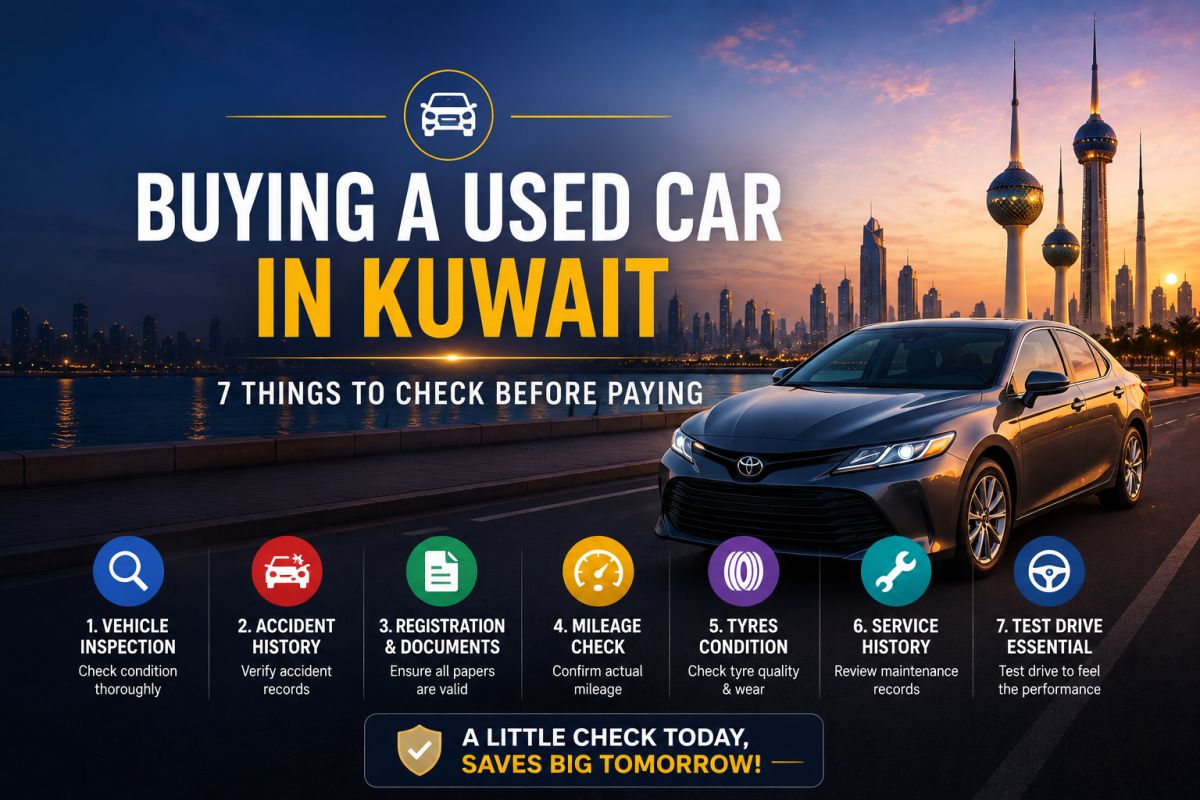
🚗 Buying a Used Car in Kuwait: 7 Things to Check Before Paying
Buying a used car in Kuwait can save a considerable amount of money compared with buying new, but the cheapest-looking deal is not always the cheapest car to own. A few careful checks before payment can protect you from expensive repairs, paperwork problems and a vehicle that becomes difficult to resell later. Here are seven things worth checking before you hand over your money. 1. Check the car's overall condition before discussing the final price Start with the basics. Walk around the vehicle in daylight and look at the body panels from different angles. Uneven paint shades, unusually wide panel gaps, fresh paint on only one part of the vehicle or overspray around rubber seals can indicate previous body repairs. Small cosmetic repairs are not automatically a reason to reject a car. What matters is understanding what happened and whether the repair affected the chassis, airbags, suspension or structural areas. Inside the car, compare the condition of the steering wheel, pedals, seats and switches with the claimed mileage. Heavy wear on a supposedly low-mileage vehicle deserves additional investigation. 2. Do not skip a proper mechanical inspection A short look under the bonnet is not enough. If you are seriously considering the vehicle, have it checked by a workshop or technician you trust. Ask them to examine the engine, transmission, cooling system, suspension, steering, brakes, battery and any visible fluid leaks. Diagnostic scanning can also reveal stored fault codes that may not currently trigger a warning light. A relatively inexpensive pre-purchase inspection can prevent a much larger repair bill after purchase. 3. Check for signs of serious accident or chassis repair Accident history matters because a vehicle can look excellent after bodywork while still having structural issues underneath. Look for welding marks, repaired chassis rails, unusual sealant, misaligned doors, uneven tyre wear and differences between factory welds on the left and right sides. If anything looks suspicious, ask a professional body or chassis specialist to inspect the vehicle. Do not rely only on a seller saying that the car has never had an accident. 4. Test the AC properly — especially in Kuwait Air conditioning is not a minor convenience in Kuwait. Run the AC long enough to confirm that it cools properly, maintains cooling at idle and does not make unusual compressor noises. Test every fan speed and, where applicable, rear AC vents and separate climate zones. An AC system that only feels acceptable during a quick evening test may struggle during peak summer temperatures. 5. Inspect the tyres, brakes and suspension Tyres can immediately add to the cost of a used-car purchase. Check all four tyres for tread depth, cracking, uneven wear and production age. Uneven tyre wear may also point to alignment or suspension problems. During the test drive, listen for suspension knocks and check whether the vehicle pulls to one side. Brake vibration through the steering wheel or pedal can indicate worn or distorted components. Use these upcoming expenses when negotiating the final price. 6. Verify the vehicle documents and seller before paying Make sure the person selling the vehicle has the authority to transfer it. Check the vehicle registration information carefully and make sure the vehicle details correspond with the car you are inspecting. Do not treat ownership transfer as something to sort out days after paying. Payment and transfer should form part of one controlled transaction. 7. Complete payment and ownership transfer safely Kuwait's Ministry of Interior provides vehicle ownership-transfer procedures through the General Department of Traffic, and vehicle ownership transfer is also available digitally through the Sahel government application. In the Sahel process, the seller initiates the transfer, the buyer accepts the request and completes the required insurance step, and the transaction continues through the application until the new electronic vehicle licence becomes available to the buyer. If your transaction requires an in-person procedure or has unusual circumstances, verify the current requirements directly with the Ministry of Interior before paying. A simple rule before buying Try not to become emotionally committed to one particular used car. Kuwait has a large used-car market, and walking away from a questionable vehicle is usually cheaper than repairing a bad purchase later. The best deal is not necessarily the car with the lowest asking price. It is the car whose condition, documentation and total expected ownership cost make sense. Quick used-car checklist • Inspect the body and chassis. • Get a mechanical inspection. • Check for accident repairs. • Test the AC thoroughly. • Inspect tyres, brakes and suspension. • Verify registration and seller details. • Complete payment and ownership transfer safely. Note: Government procedures can change. Always verify the latest vehicle-transfer requirements through Kuwait's Ministry of Interior or the Sahel government application before completing a transaction.
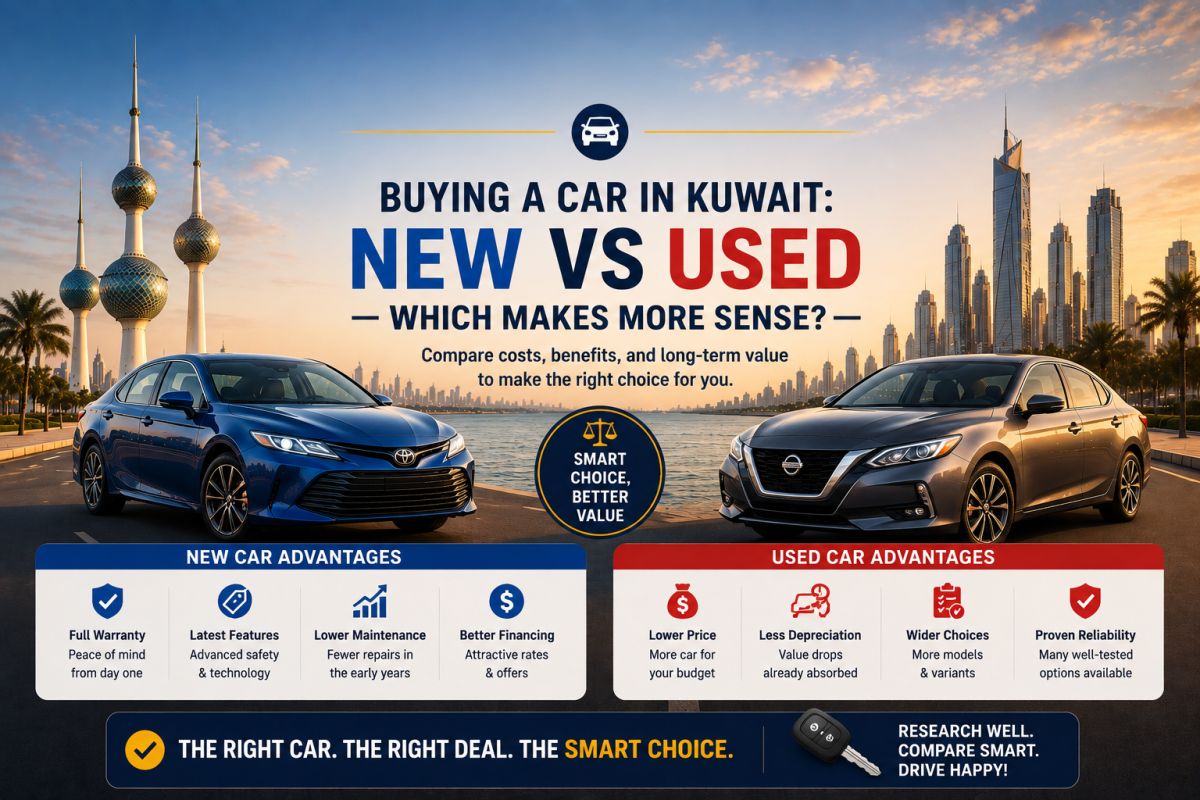
🚗 Buying a Car in Kuwait: New vs Used — Which Makes More Sense?
One of the first decisions when buying a car in Kuwait is whether to buy new or used. There is no single answer that is correct for everyone. The better choice depends on your budget, how long you expect to keep the car, how much uncertainty you are comfortable with and how important warranty coverage is to you. Here is a practical way to compare the two choices. New car: the main advantages The biggest advantage of a new vehicle is predictability. You know its history from day one, there is no previous owner, and manufacturer or dealer warranty coverage can reduce the risk of unexpected repair costs during the early years. A new car can make particular sense if you intend to keep it for a long period. The initial depreciation becomes less important when the purchase cost is spread over many years of ownership. You may also get newer safety equipment, updated infotainment, improved fuel efficiency and access to current dealer finance or service packages. New car: the main disadvantages The largest disadvantage is usually price and depreciation. A new vehicle generally loses part of its value once it enters the used market. Higher purchase prices can also mean a larger down payment or monthly commitment. Depending on the vehicle, insurance and dealer servicing may also cost more. Used car: the main advantages A used vehicle can offer significantly more car for the same budget. Instead of buying an entry-level new model, the same amount may buy a better-equipped or larger vehicle that is a few years old. The previous owner has also absorbed some of the early depreciation. If you choose a popular model with a strong Kuwait resale market, you may be able to sell it later without taking the same percentage loss as the first owner. Used car: the main disadvantages The unknown history is the major risk. Poor maintenance, accident damage, overheating, transmission problems and delayed repairs may not be obvious during a quick viewing. This is why a proper pre-purchase inspection matters. The money saved on the purchase price can disappear quickly if the vehicle immediately needs tyres, suspension work, AC repairs or major mechanical work. Think about Kuwait's climate Kuwait's heat places considerable demand on batteries, cooling systems and air conditioning. When comparing two used vehicles, service history and cooling-system condition can sometimes matter more than small differences in mileage. For a new vehicle, warranty coverage provides additional reassurance during these early years. For a used vehicle, reserve part of your purchase budget for initial maintenance rather than spending every dinar on the purchase price itself. Consider parts availability and workshop support A low purchase price does not automatically mean low ownership cost. Before choosing a model, consider how easily spare parts are available in Kuwait, how many workshops know the vehicle and what common repairs cost. Mainstream Japanese and Korean vehicles often attract buyers partly because servicing and parts can be easier to manage, but condition matters more than nationality or badge alone. Think about resale before you buy Even if you plan to keep the car for several years, consider how easy it may be to sell later. Model reputation, specification, engine choice, service history, colour, accident history and overall condition can all influence demand. A slightly more expensive vehicle with good resale demand may ultimately cost less to own than a cheaper vehicle that becomes difficult to sell. When a new car may make more sense • You want warranty protection and predictable costs. • You plan to keep the vehicle for many years. • You do not want the uncertainty of previous ownership. • You value the newest safety and technology features. • Your budget comfortably supports the purchase without financial strain. When a used car may make more sense • You want to reduce the initial purchase cost. • You want a higher-specification vehicle for the same budget. • You are comfortable arranging an independent inspection. • You understand that some maintenance expenses may arrive sooner. • You want to avoid part of the first owner's depreciation. The middle ground: a relatively young used car For many buyers, a well-maintained vehicle that is only a few years old can be an attractive compromise. It may already have absorbed part of its initial depreciation while still feeling modern and potentially retaining some warranty coverage, depending on the brand and terms. Bottom line If maximum predictability and warranty coverage matter most, buying new can be worth the premium. If value for money matters more and you are willing to inspect carefully, a good used car can make excellent financial sense. Whichever path you choose, compare total ownership cost rather than only the advertised price.
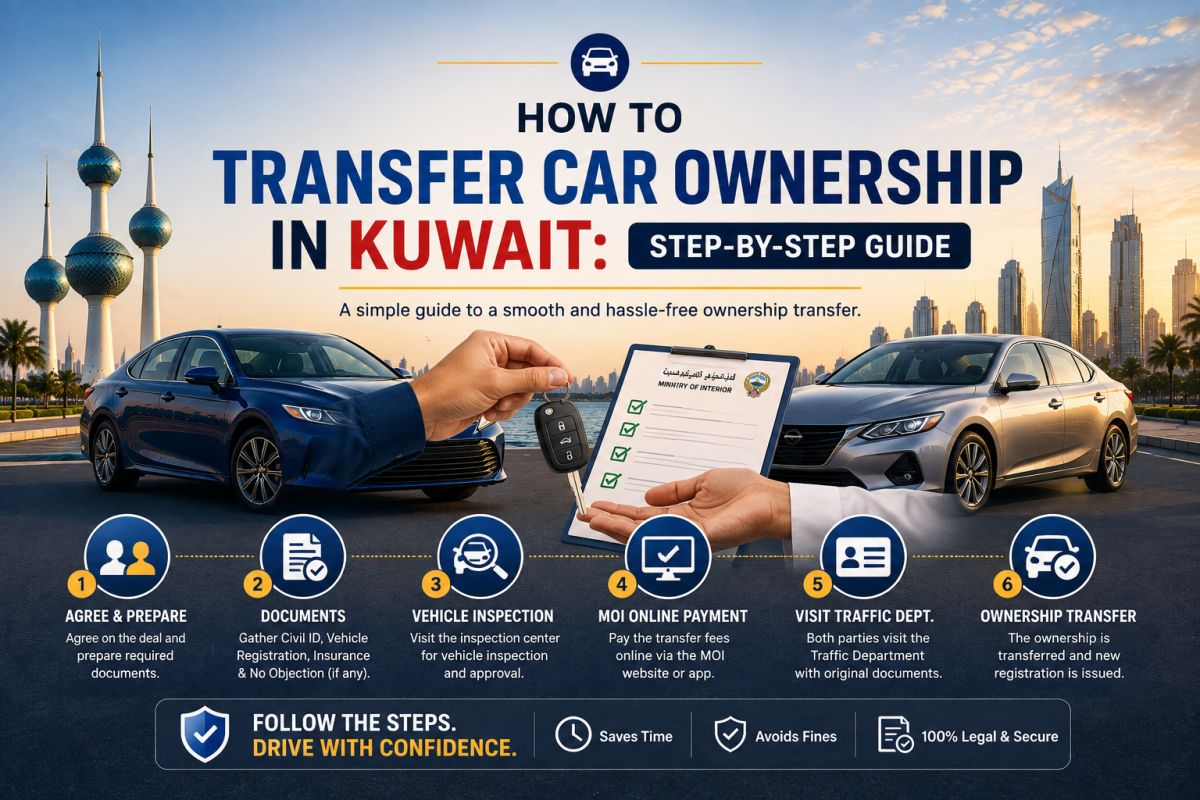
🚗 How to Transfer Car Ownership in Kuwait: Step-by-Step Guide
Once a buyer and seller agree on a vehicle in Kuwait, the deal is not complete until ownership is formally transferred. Handling this step properly protects both sides and ensures the vehicle is registered to the correct owner. Kuwait's Ministry of Interior provides vehicle ownership-transfer services through the General Department of Traffic, and an electronic vehicle-transfer service is also available through the Sahel government application. Option 1: Transfer vehicle ownership through Sahel The Ministry of Interior has introduced electronic vehicle ownership transfer through the Sahel application for eligible transactions. Step 1: Seller starts the request The seller opens Sahel and goes to Ministry of Interior services, then Traffic Services and Vehicle Ownership Transfer. The seller selects the vehicle and enters the new owner's Civil ID number. Step 2: Buyer receives the request The buyer receives a notification, reviews the ownership-transfer request and approves the required procedure. Step 3: Complete the insurance-transfer requirement As part of the digital process, the buyer completes the applicable vehicle-insurance transfer step and associated requirement shown through the service. Step 4: Seller confirms payment The seller receives the next notification and confirms the required payment/transaction information before completing the ownership-transfer stage. Step 5: Buyer receives the new vehicle licence After completion, the buyer can access the newly transferred electronic vehicle licence and add the updated licence to the digital wallet through the applicable government application. Traditional ownership-transfer requirements The Ministry of Interior also publishes the underlying vehicle-transfer procedure. The listed requirements include transferring the insurance document from the old owner to the new owner, seller and buyer identification, the vehicle registration booklet and ensuring applicable financial penalties have been settled. For transactions that cannot be completed through the digital process, additional attendance or documentation may therefore be required. What should the buyer prepare? • Valid Civil ID. • Correct Civil ID details for the transaction. • Required vehicle insurance arrangements. • Agreed payment method and proof where applicable. • Access to Sahel and the relevant Kuwait digital-government services where the digital method is being used. What should the seller prepare? • Vehicle registration information. • Valid Civil ID. • The vehicle being transferred must correspond with the registration records. • Any outstanding requirements or fines should be resolved. • Required confirmations inside the Sahel transfer process when using the digital service. Do not pay and postpone the transfer From a buyer's perspective, the safest approach is to treat payment and ownership transfer as connected parts of the same transaction. Avoid paying the full amount and then agreeing to complete the transfer several days later unless there is a clear, legitimate reason and you fully understand the risk. Check the vehicle before reaching the transfer stage Ownership transfer only confirms who owns the vehicle. It does not mean the vehicle is mechanically sound. Before completing the purchase, inspect the car, verify the registration details, check for major accident repairs and arrange a professional mechanical inspection when appropriate. What if the normal digital transfer does not work? Some transactions can involve circumstances that require additional documentation or direct assistance from the General Department of Traffic. If Sahel does not allow the transaction to proceed, do not try to bypass the process. Confirm the required procedure with the Ministry of Interior. Final checklist • Buyer and seller have agreed on the final price. • The vehicle has been inspected. • Registration information matches the vehicle. • Insurance requirements are ready. • Any applicable fines or restrictions are resolved. • Payment and transfer are coordinated safely. • The buyer confirms the new vehicle licence after completion. Important: Government procedures and digital services can change. Check the latest instructions in Sahel or directly through Kuwait's Ministry of Interior before completing a vehicle transaction. Official references: Kuwait Ministry of Interior — General Department of Traffic vehicle ownership-transfer procedures and Sahel vehicle ownership-transfer service.
